
What does iFrugal do
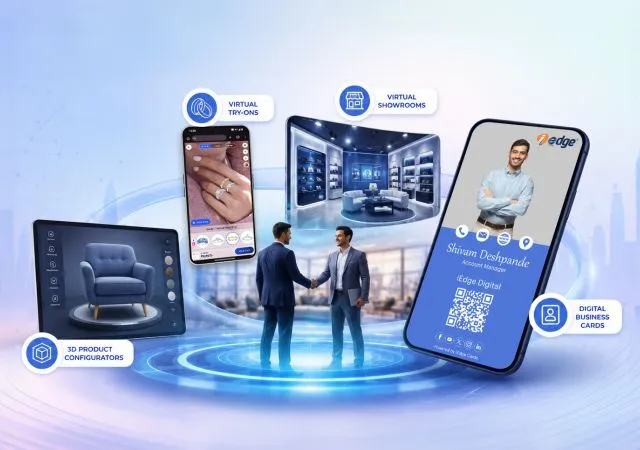
iFrugal by iPhygital is a marketing platform that helps iPhygital and iEdge promote products such as digital business cards, 3D product configurators, virtual try-ons, and virtual showrooms.
It allows us to deliver information and product details to potential customers effectively.
Objective of iFrugal
Building a strong business foundation
Initiate the Conversation
iFrugal helps us set up and start the first conversation with potential clients. It allows us to present solutions to their business problems along with proven results.
Bring in More Business
iFrugal helps us target businesses, CEOs, VPs, and other business heads so we can connect with them and demonstrate how our products can benefit their business.
Client Targeting
It helps us reach the right audience who need our products, either to improve their communication and sales processes or to scale their business further.
Benefits of iFrugal
Beyond Boundaries, Beyond Business.
Quick Outreach
iFrugal allows us to quickly reach customers globally without any trouble quickly and efficiently.
Better Results
It helps us generate high-quality leads for the business and makes the process smooth, so we can easily connect with potential clients.

Direct Communication
It allows us to directly connect with top management, which eliminates unnecessary long communication cycles.
Quality Data
It allows us to filter and target the right audience, so our efforts and message reach the right people.
Frequently Asked Questions
Everything you need to know
iFrugal is a subdomain of iPhygital and iEdge, which we use to send email campaigns, to reach a diverse audience. It allows us to target companies that are looking for solutions like virtual try-on, 3D product configurator, virtual showroom, and smart business cards.
A digital business card is an electronic version of a traditional paper card that stores contact details, links, and branding elements. It can be shared instantly via QR codes, NFC, links, or email.
When someone opens it, they can view your information, save your contact, or access your website and social profiles. It simplifies networking, keeps information up to date, and eliminates the need for printed cards.
A smart business card enhances networking by enabling instant, contactless sharing of information using NFC or QR technology. It allows professionals to share not just contact details but also portfolios, social media links, and websites.
iEdge smart business cards also provide analytics, helping users track interactions and engagement. This makes networking more efficient, data-driven, and impactful.
A 3D product configurator allows customers to customize products in real time by changing attributes like color, material, size, or components. As users make changes, they see instant visual updates in a 3D model.
This interactive experience helps customers better understand the final product, reduces confusion, and ensures they get exactly what they want, improving satisfaction and purchase confidence.
Industries that offer customizable or visually complex products benefit the most from a 3D product configurator. These include furniture, automotive, fashion, jewelry, electronics, home decor, and manufacturing.
In these sectors, customers often want to explore different variations before buying. A configurator helps them visualize options clearly, making decision-making easier and more informed.
Virtual try-on technology provides a highly realistic visualization by using AR, AI, and computer vision to place products on a user’s image. It accurately tracks features like face shape, wrist position, or body alignment to scale and position products correctly.
While it may not perfectly replicate physical fit, it offers a close approximation of appearance, helping customers assess style, size, and suitability effectively.
Yes, virtual try-on can reduce product return rates by helping customers make more informed decisions before purchasing. By visualizing how a product looks on them, shoppers gain clarity about style, fit, and appearance.
This reduces mismatched expectations, which is one of the main reasons for returns in eCommerce, ultimately saving costs for businesses.
A virtual showroom allows customers to explore products in an immersive digital environment from anywhere. They can view items from multiple angles, interact with features, and compare products easily.
It offers convenience, saves time, and provides a more engaging experience than static product pages. Customers can make better-informed decisions without visiting a physical store.
A virtual showroom provides an interactive and immersive experience where customers can explore products in a 3D environment, similar to a physical store. In contrast, a traditional eCommerce store relies on static images and basic product descriptions.
Virtual showrooms enable product interaction, real-time exploration, and enhanced visualization, making the shopping experience more engaging and closer to in-store browsing.